 English
 Español
 Português
 русский
 Français
 日本語
日本語 Deutsch
 tiếng Việt
 Italiano
 Nederlands
 ภาษาไทย
 Polski
 한국어
한국어 Svenska
 magyar
 Malay
Malay বাংলা ভাষার
 Dansk
Dansk Suomi
Suomi हिन्दी
Products
- Alexandrite laser Hair Removal
- Air Cooling Machine
- Diode Laser Hair Removal
- Diode Laser IPL YAG Laser RF
- IPL Laser Machine
- Picosecond Laser
- ND YAG Q-Switch Laser
- Surgical Laser Lipolysis
- Fractional Laser
- Mesotherapy Gun
- Body Shape
- Velashape
- Fractional RF Microneedling
- Hydra-facial Skin Management
- Skin Analyzer
- HIFU High Intensity Focused Ultrasound
- Plasma Pen
- UV Phototherapy
New Products
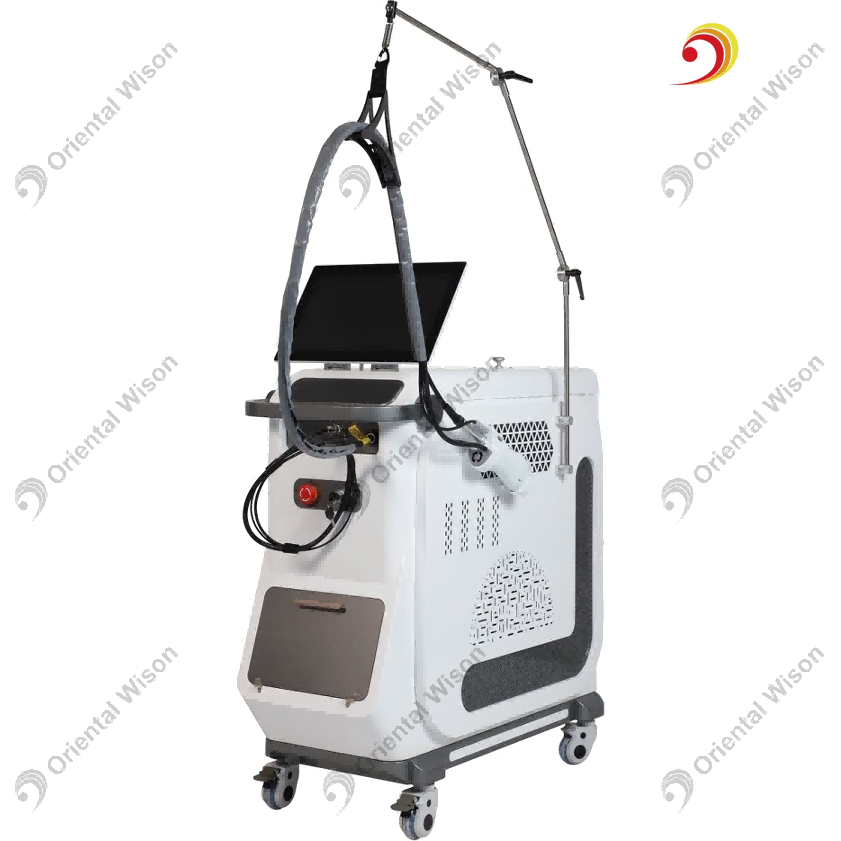 755nm Alexandrite Laser Hair Removal 1064nm Long Pulse Laser Beauty Machine Cosmetic Laser
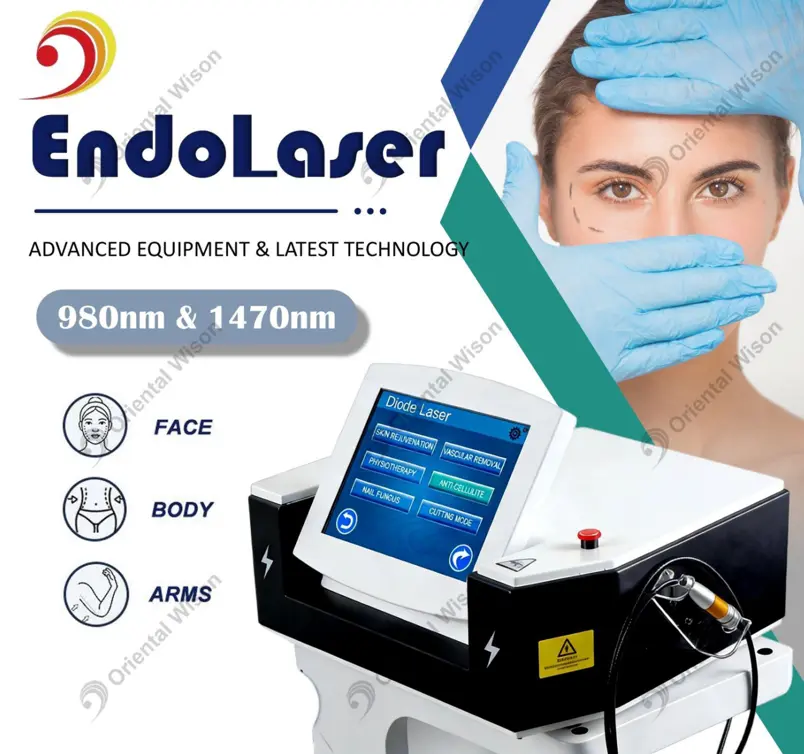 Dual Wavelength 980nm & 1470nm Laser Lipolysis Double Chin Removal Beauty Machine
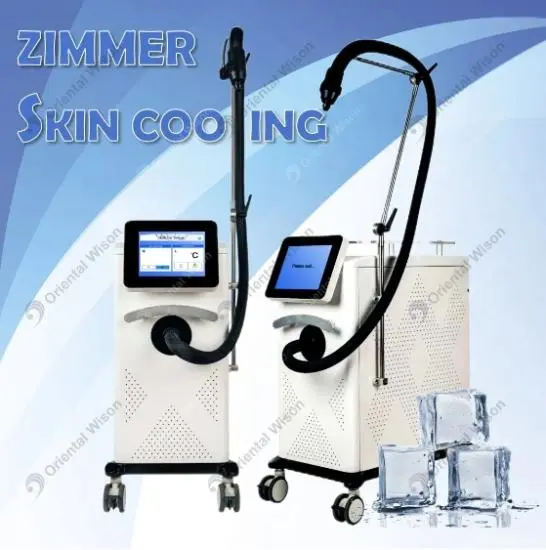 8-inch Screen Zimmer Cooler Machine
 TwinLaser 2940nm 1064nm Anti-Aging Skin Beauty Machine
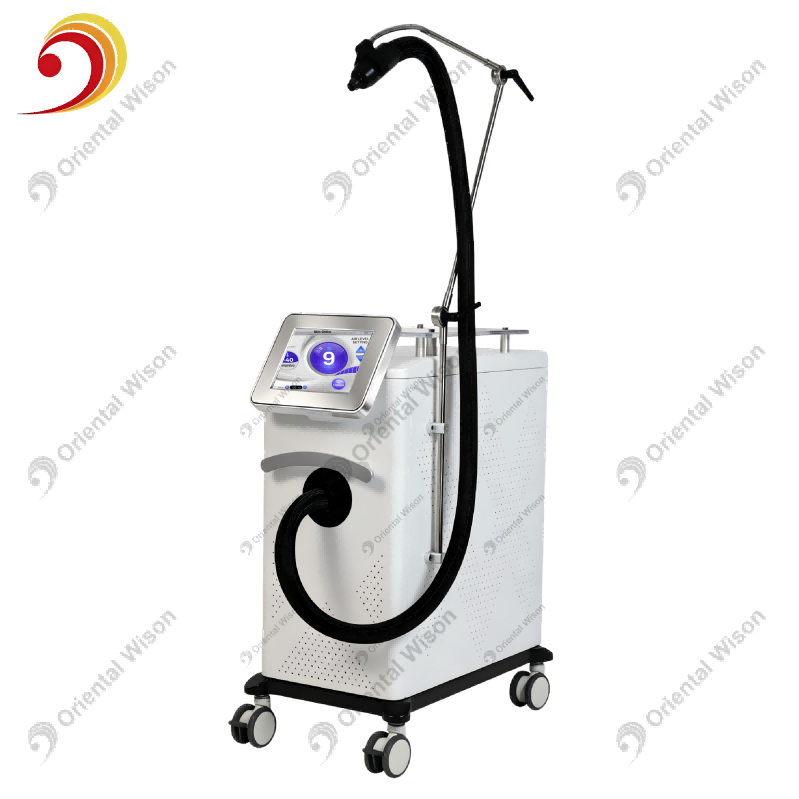 8 inch Screen Time Counting Cold Air Skin Cooling Beauty Machine
- All new products
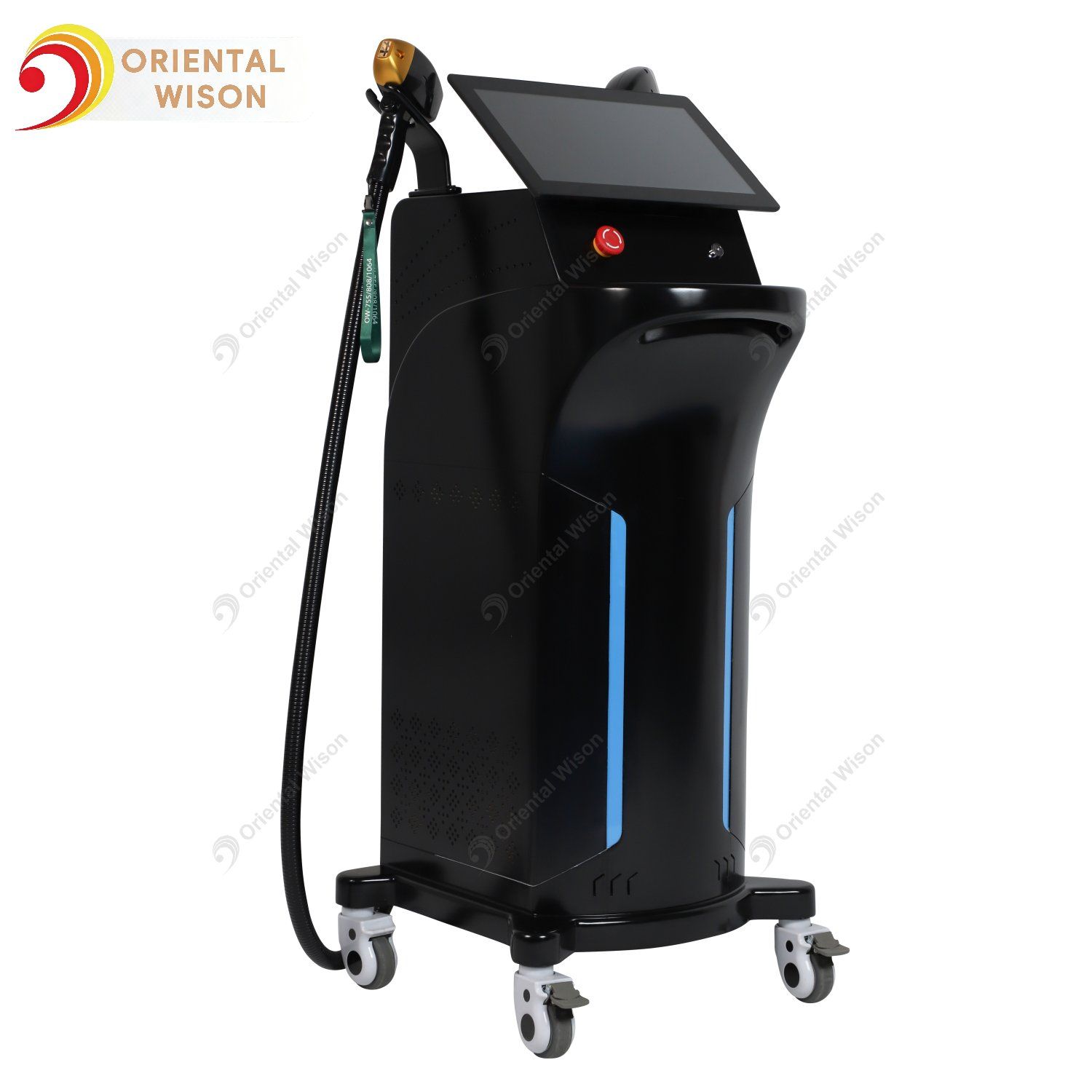
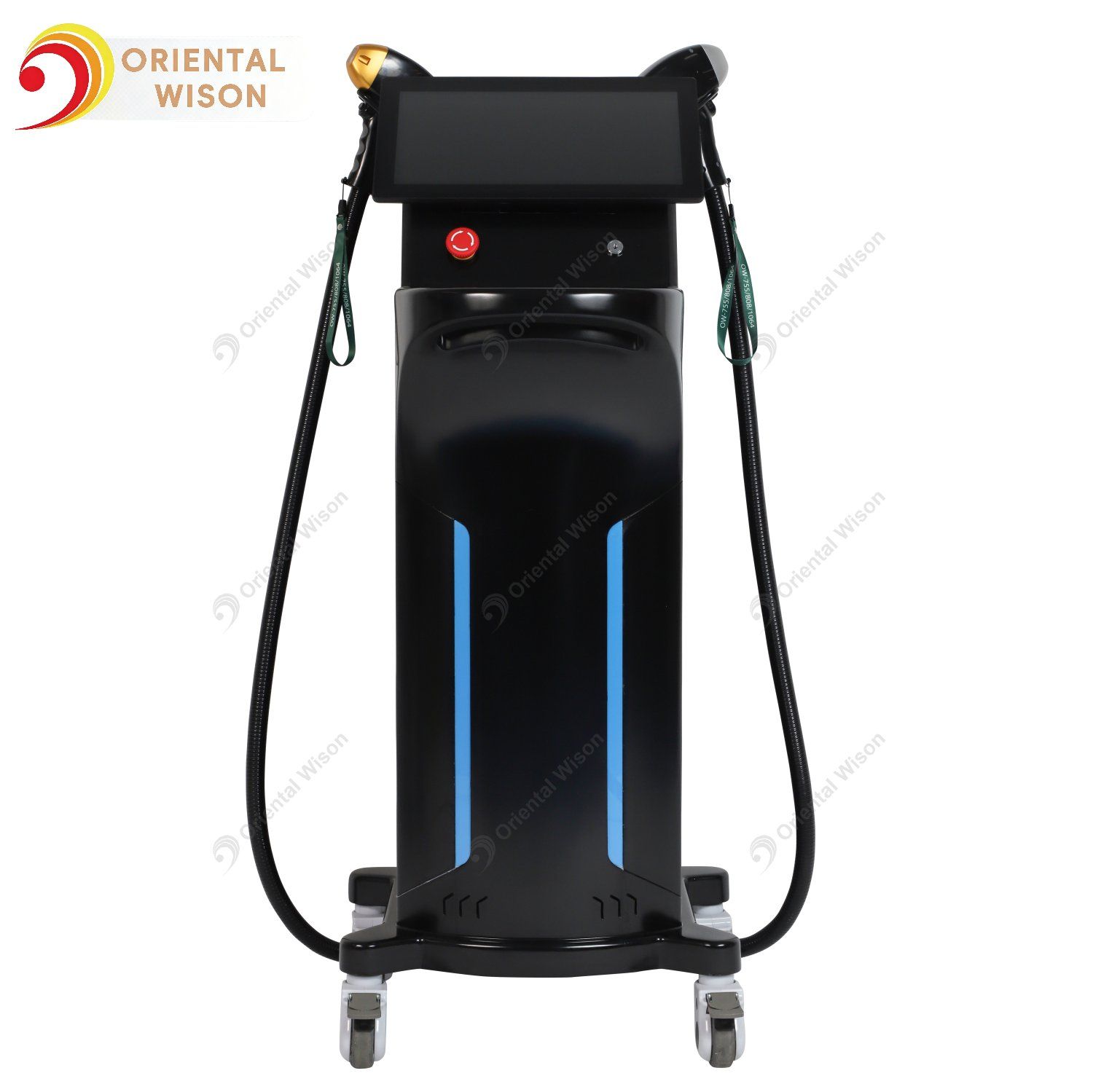
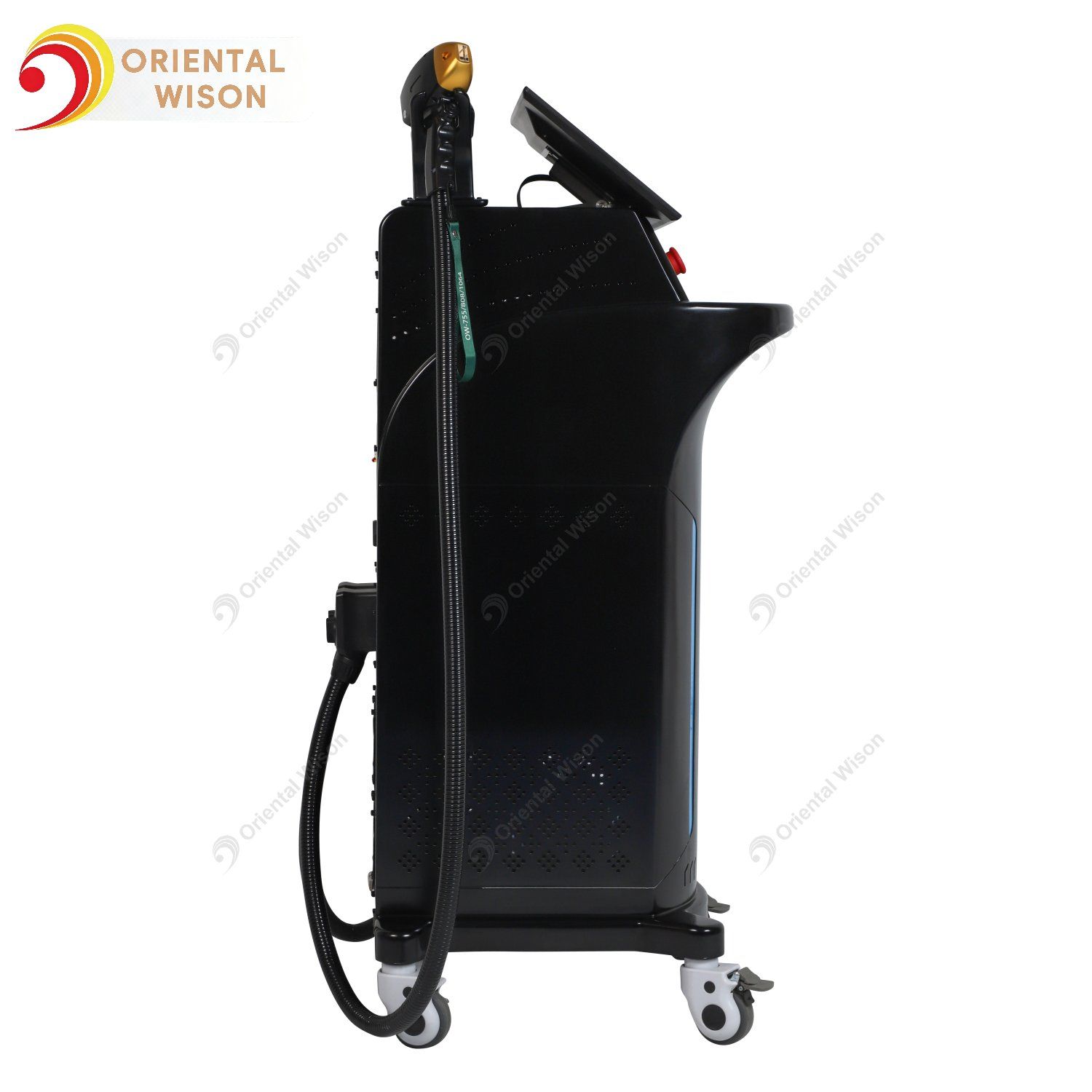
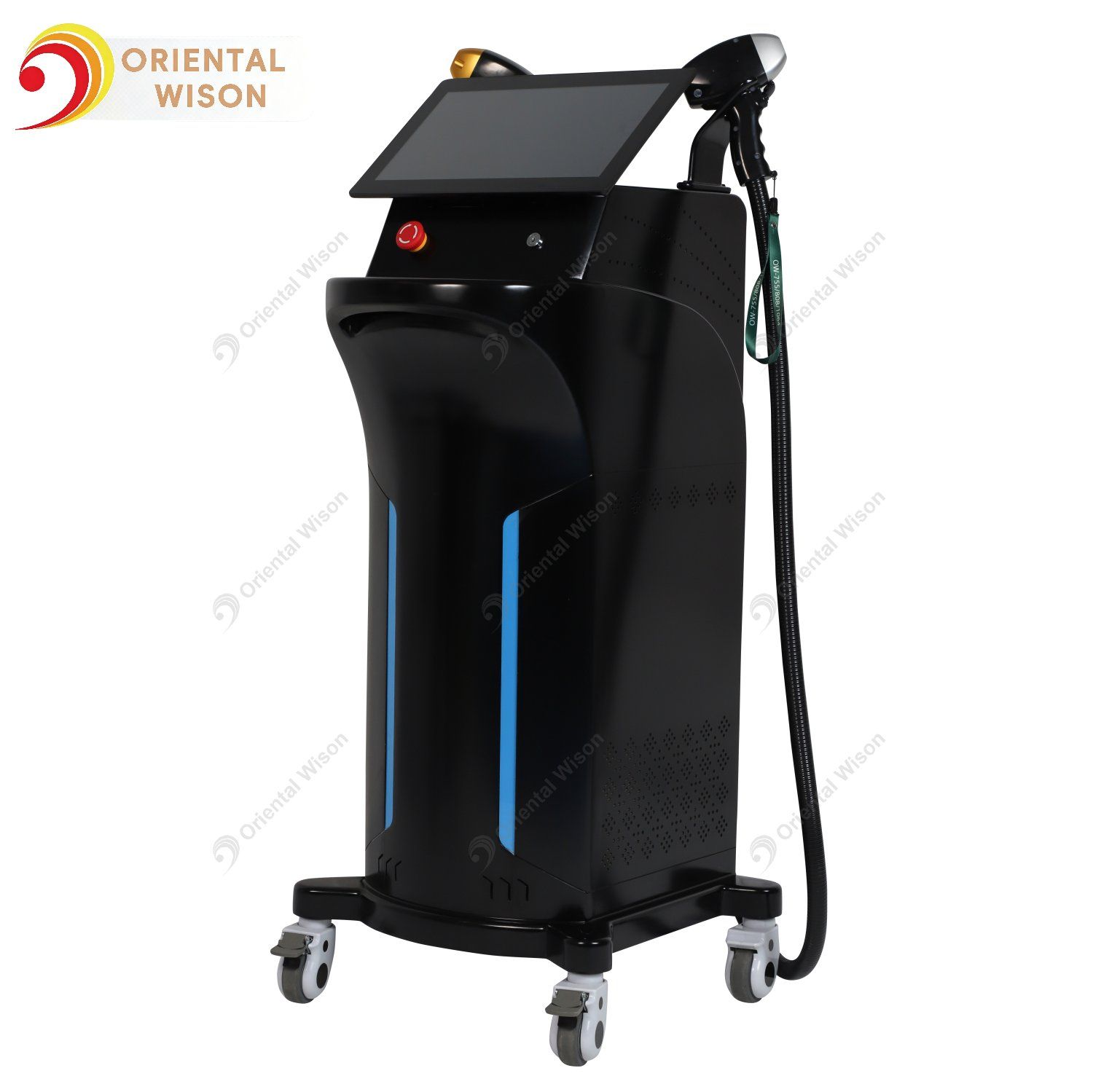
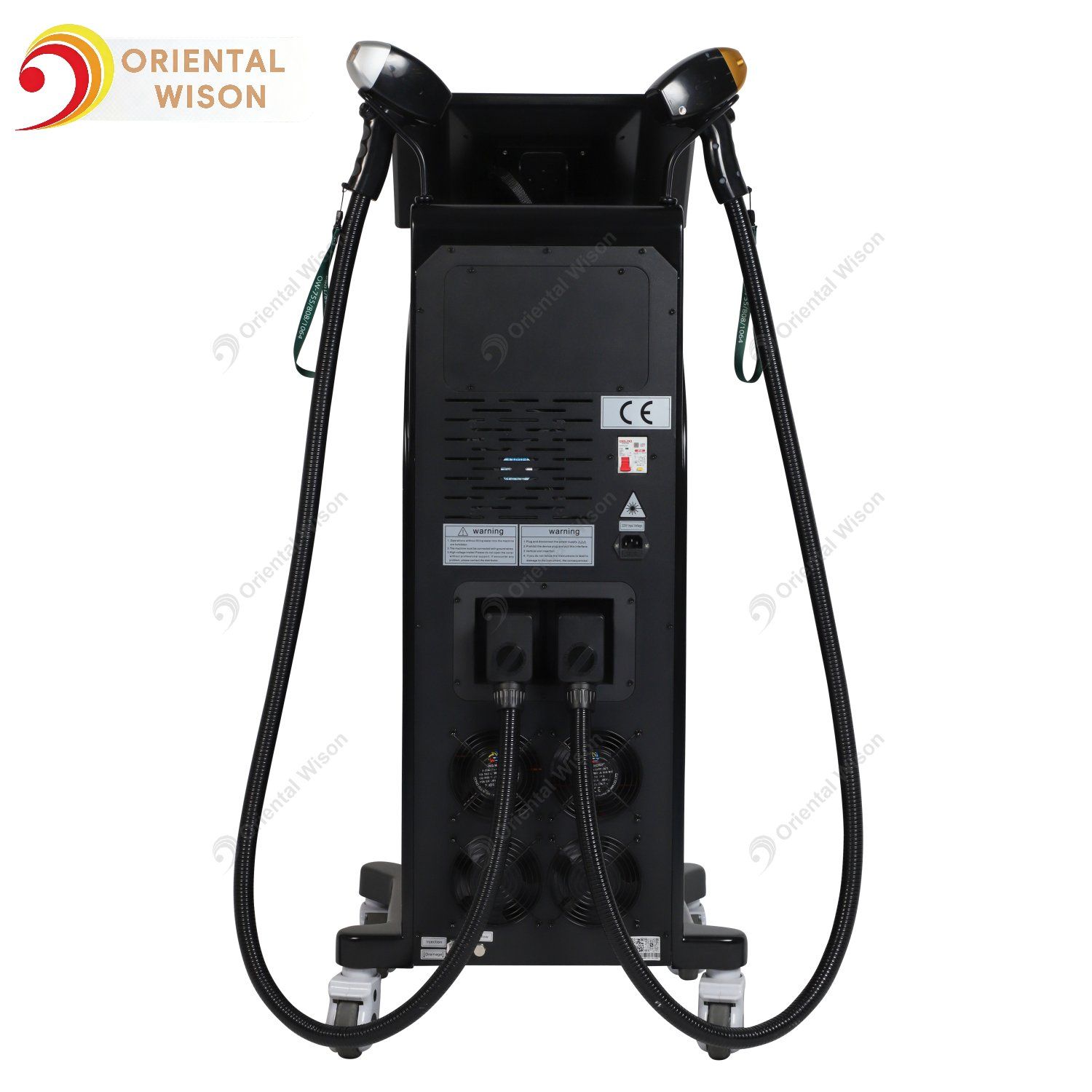
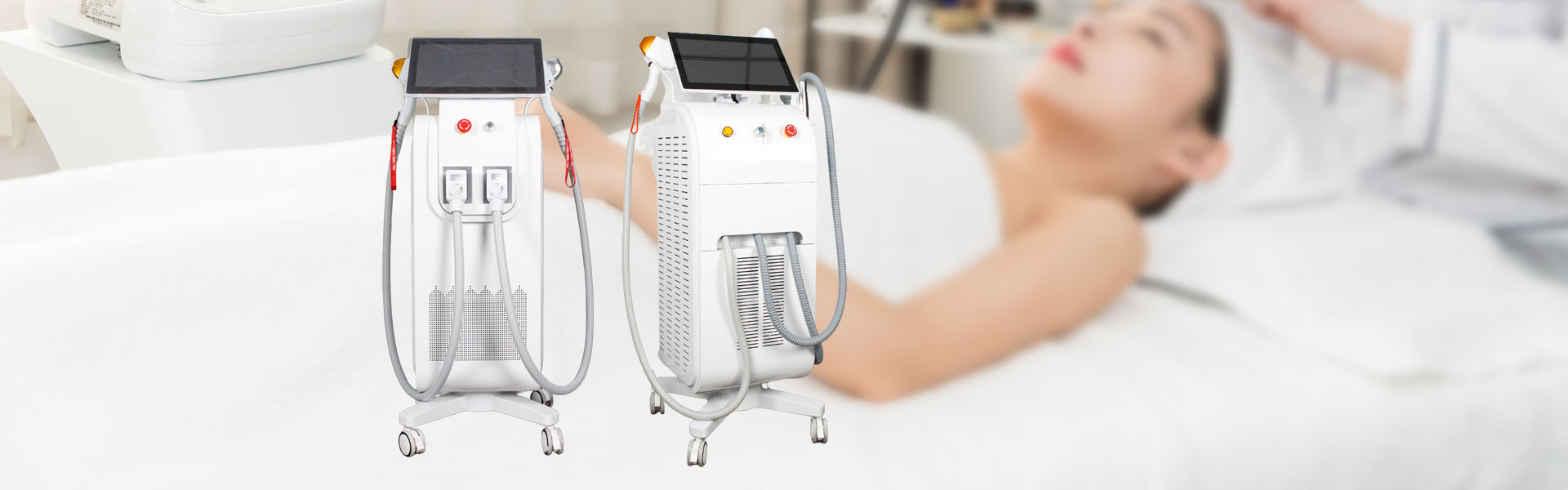
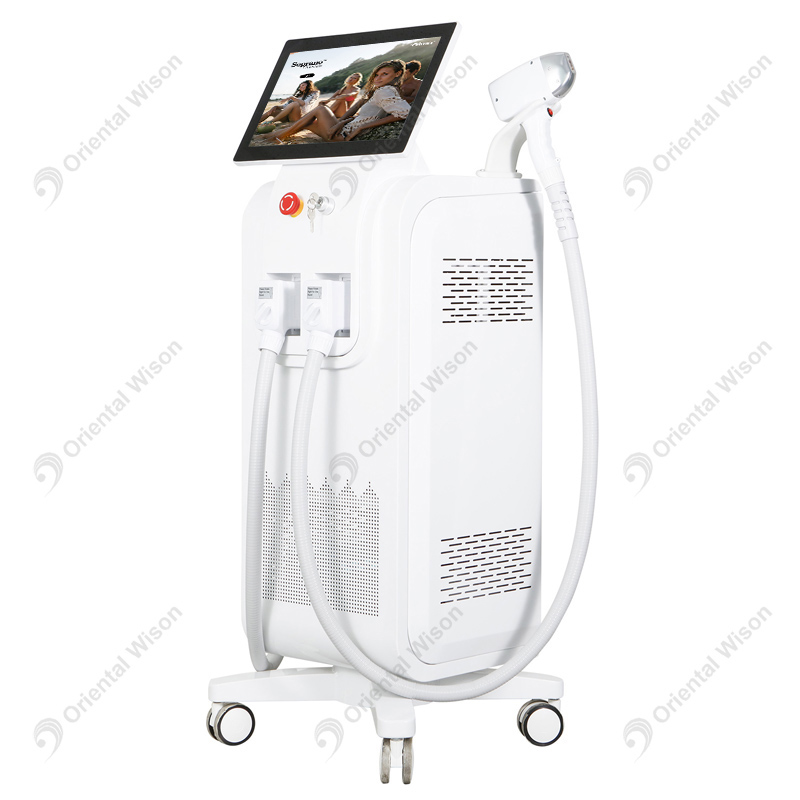
Advanced Diode Laser Hair Removal with Double Handles
The Diode laser hair removal with double handles is a professional high-performance system for aesthetic clinics and medispas. Featuring adjustable power from 1200W to 2400W and triple wavelengths (755nm, 808nm, 1064nm), it effectively treats all hair types and skin tones. The dual‑handle design enables continuous operation, cutting treatment times and maximizing patient flow. Advanced cooling and intuitive controls ensure safe, comfortable, and consistent outcomes for every session.
Model:OW-G3
Send Inquiry
Product Description
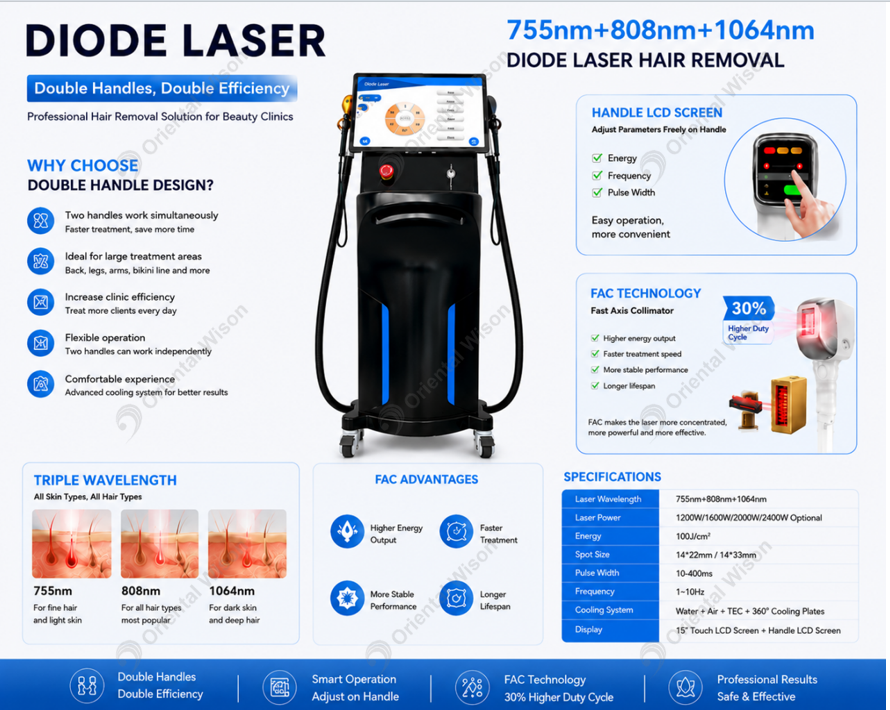
The Diode laser hair removal with double handles is a high-performance professional hair removal system designed for beauty salons, aesthetic clinics, and medical beauty centers. Equipped with advanced diode laser technology, this machine combines powerful energy output, intelligent operation, and an efficient dual-handle design to provide faster and more comfortable hair removal treatments.
With optional laser power configurations of 1200W, 1600W, 2000W, and 2400W, this diode laser system delivers stable performance for different treatment requirements. The combination of 755nm, 808nm, and 1064nm wavelengths allows operators to treat different hair types and skin conditions with high precision.
The double handle design improves working efficiency by allowing continuous operation and reducing treatment time, making it an ideal solution for high-volume professional clinics.
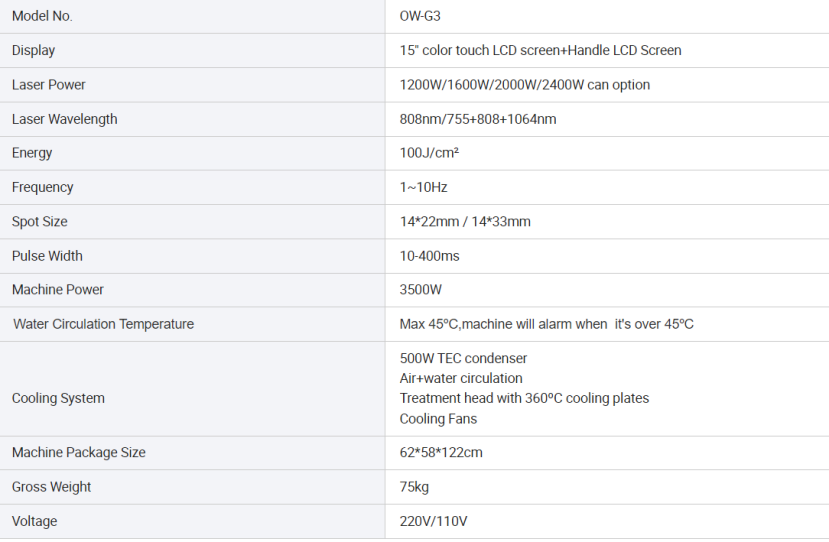
Technical Specifications
How Does Diode Laser Hair Removal Work?
Diode laser technology works by delivering controlled laser energy into hair follicles. The laser wavelength is absorbed by melanin in the hair follicle, generating thermal energy that targets the follicle while protecting surrounding skin.
The combination of different wavelengths allows professionals to customize treatments according to hair thickness, treatment area, and client skin characteristics.
Handle Specific Specifications
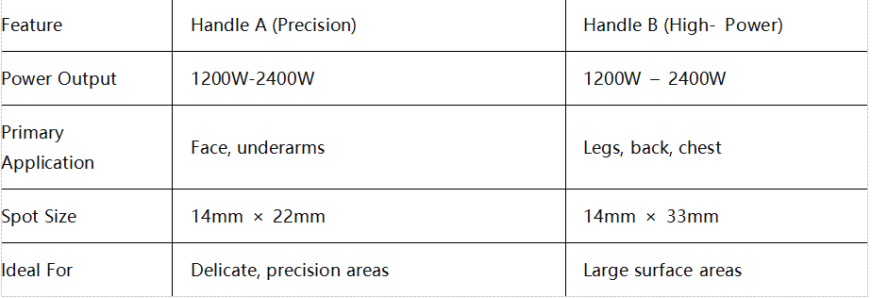
Three Wavelengths for Three Functions
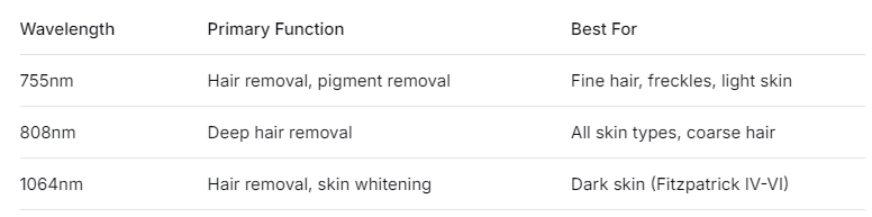
Core Functions by Technology
Diode Laser - Hair Removal
- Permanent reduction of unwanted hair
- Effective on underarms, bikini line, face, legs, and back
- Laser bar wavelengths: 808nm + 1064nm + 755nm
- Contact cooling protects epidermis during treatment
- Suitable for skin types I through VI
FAC Collimation and Compression Technology
The handpiece incorporates FAC technology with four distinct advantages.
Advantage 1 - Uniform Laser Output
FAC collimation reduces the laser output divergence angle. The result is a more uniform and concentrated laser output. This yields superior clinical hair removal results.
Advantage 2 - Extended Laser Lifespan
The technology minimizes damage from optical back-reflection. This effectively extends the service life of the laser within the handpiece.
Advantage 3 - Enhanced Cooling Performance
By reducing divergence angle and back-reflection losses, the handpiece reduces photothermal energy loss. This enhances the cooling performance of the handpiece.
Advantage 4 - Superior Stability
Laser sources using FAC fast-axis collimation technology demonstrate superior stability and lower repair rates. This technology has become the industry standard.
Dual Handle Design
The defining feature of diode laser hair removal with double handles is the ability to run two independent handpieces simultaneously or alternately. This allows clinics to:
-Treat two patients concurrently with different protocols
-Switch instantly between precision and high power modes
-Maintain separate handles for different practitioners
Step-by-Step Clinical Applications
Hair Removal Protocol
- Step 1: Shave treatment area 24 hours before session
- Step 2: Select Diode laser based on skin type
- Step 3: Apply cooling gel if using IPL
- Step 4: Deliver overlapping pulses across target zone
- Step 5: Schedule 4-6 sessions at 6-8 week intervals
Key Features of the Workstation
Latest FCA Laser Bar Technology
- Uniform energy distribution across entire spot size
- Extended diode life compared to traditional bars
- Consistent output across all three Diode wavelengths
Advanced Cooling System
- Water circulation plus internal fans plus 500W TEC
- Maintains handpiece tip temperature between 0 and 5°C
- Protects skin during high-fluence hair removal
- Enables comfortable tattoo removal sessions
15.6 Inch Touch Screen Interface
- Preset protocols for each of the nine treatments
- Real-time adjustment of fluence, frequency, and mode
- Treatment history storage per client
Space-Saving Mobile Design
- 52 x 61 x 126 cm footprint
- Lockable casters for room-to-room mobility
- One electrical connection powers all four technologies
Frequently Asked Questions
FAQ 1: How does diode laser hair removal with double handles differ from single-handle systems?
Answer: The primary difference lies in versatility and workflow efficiency. A single-handle system forces practitioners to use the same power output and spot size for every treatment area, which often means compromising either on precision or speed. Diode laser hair removal with double handles solves this by providing two dedicated handles: one optimized for large areas like legs and backs (higher power, larger spot size), and another for precision zones like the face and arm(lower power, smaller spot size). Additionally, separate treatment heads for each handle significantly improve hygiene by eliminating the need to swap handpieces between patients, reducing cross-contamination risks. For busy clinics, this translates to faster treatment times, higher client throughput, and better clinical outcomes.
FAQ 2: Is diode laser hair removal with double handles suitable for all skin types?
Answer: Yes, modern diode laser hair removal with double handles systems are designed to treat all Fitzpatrick skin types (I through VI). The key is wavelength selection. The 808nm wavelength is considered the "gold standard" and works effectively across most skin and hair types. For darker skin types (Fitzpatrick IV-VI), the 1064nm wavelength offers deeper penetration with lower melanin absorption, making it safer and more conservative. Systems with multiple wavelength options (755nm, 808nm, 940nm, and 1064nm) provide the greatest flexibility. The advanced cooling system further enhances safety by protecting the epidermis during treatment, making the procedure comfortable even for clients with sensitive skin.
FAQ 3: How many treatments are typically needed, and how long does each session take?
Answer: Most clients require 4–6 treatment sessions spaced 4–6 weeks apart to achieve optimal, long-term hair reduction. Visible results often appear after just 2–3 sessions. The duration of each session depends on the treatment area. With diode laser hair removal with double handles, treatment times are significantly reduced compared to single-handle systems. A full leg treatment typically takes 15–20 minutes, while smaller areas like the upper lip or underarms can be completed in 5–10 minutes. The large spot sizes (up to 15mm × 40mm) allow practitioners to cover more area per pulse, and the high power output (up to 2000W per handle) ensures each pulse delivers sufficient energy to effectively damage the hair follicle. The dual-handle design also enables simultaneous or alternating treatments, further improving clinic efficiency
Comparison With Single-Function Devices
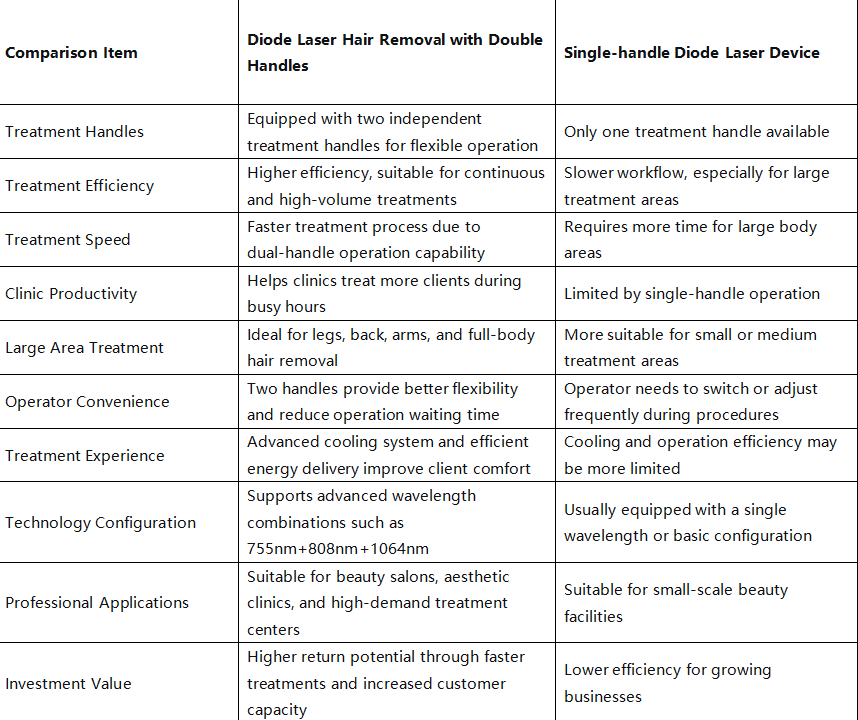
Maintenance Guidelines
Daily Maintenance
- Clean all handpiece tips with alcohol wipes after each client
- Verify water level in cooling reservoir
- Wipe touch screen with microfiber cloth
Weekly Maintenance
- Inspect Diode laser bar for debris on output window
- Clean cooling system air intake vents
- Run test pulses on energy meter
Monthly Maintenance
- Calibrate energy output for all four technologies
- Replace water if cooling efficiency decreases
- Document pulse counts per handpiece
Contraindications and Safety
Absolute Contraindications
- Pregnancy or breastfeeding
- Active skin infections in treatment area
- Current isotretinoin use (within 6 months)
- Photosensitivity disorders (lupus, porphyria)
- Malignant skin lesions
Relative Contraindications
- Tanned skin (wait 4 weeks after sun exposure)
- History of keloid scarring
- Metallic implants near RF treatment area
- Pacemakers (RF contraindicated)
Hot Tags: Diode Laser
Hair Removal
Laser Epilation
Laser Hair
Permanent Hair
Hair Reduction
Fast Epilation
Safe Epilation
Smooth Skin
Painless Hair
Product Tag
Send Inquiry
Please feel free to fill your inquiry in the form below. We will reply you in 24 hours.
Related Products







X
We use cookies to offer you a better browsing experience, analyze site traffic and personalize content. By using this site, you agree to our use of cookies.
Privacy Policy

 Whatsapp:8613811714803