 English
 Español
 Português
 русский
 Français
 日本語
日本語 Deutsch
 tiếng Việt
 Italiano
 Nederlands
 ภาษาไทย
 Polski
 한국어
한국어 Svenska
 magyar
 Malay
Malay বাংলা ভাষার
 Dansk
Dansk Suomi
Suomi हिन्दी
Products
- Alexandrite laser Hair Removal
- Air Cooling Machine
- Diode Laser Hair Removal
- Diode Laser IPL YAG Laser RF
- IPL Laser Machine
- Picosecond Laser
- ND YAG Q-Switch Laser
- Surgical Laser Lipolysis
- Fractional Laser
- Mesotherapy Gun
- Body Shape
- Velashape
- Fractional RF Microneedling
- Hydra-facial Skin Management
- Skin Analyzer
- HIFU High Intensity Focused Ultrasound
- Plasma Pen
- UV Phototherapy
Product Description
IPL Laser & NIR Cell Light – 4K Screen Multi-Filter Beauty Device
H1: Clinical-Grade IPL Laser & NIR Cell Light System for Aesthetic Practices
H2: Product Overview
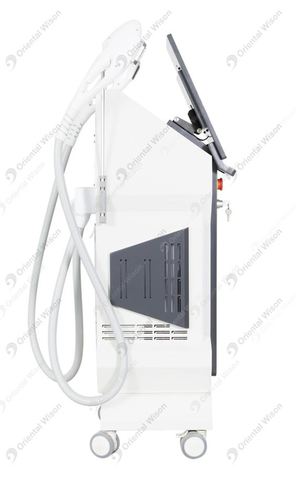
This professional workstation combines high-intensity pulsed light with near-infrared therapy in a single 500W platform. Designed for medical spas, dermatology clinics, and aesthetic centres, the system delivers targeted treatments for vascular lesions, acne, pigmentation, and skin rejuvenation.
Core capabilities:
11 interchangeable optical filters for condition-specific wavelengths
15-inch 4K touchscreen for precise parameter control
Dual working modes (FPL + NIR) for synergistic effects
Maximum energy output of 50J/cm²
Pulse duration up to 10ms for optimal thermal relaxation
H2: Complete Technical Specifications
H3: Optical and Energy Parameters
|
Parameter |
Specification |
|
Energy Fluence |
50J/cm² (adjustable 10–50J/cm²) |
|
Pulse Duration |
Max 10ms (1–10ms digitally controlled) |
|
Maximum Power |
500W |
|
Working Modes |
FPL (Fluorescent Pulsed Light) + NIR (Near-Infrared) |
|
Light Source |
High-intensity flashlamp with integrated NIR emitter |
|
Beam Uniformity |
±5% energy homogeneity |
H3: Display and User Interface
Screen size: 15 inch diagonal
Resolution: 4K (3840 × 2160 pixels)
Technology: Capacitive touchscreen with anti-glare coating
Interface features:
Pre-set protocol library for each filter type
Real-time energy monitoring and adjustment
Patient history storage and recall
Firmware upgradeable via USB-C port
H3: Physical Dimensions and Power
|
Specification |
Detail |
|
Gross Weight |
67kg |
|
Package Size |
54 × 54 × 115 cm |
|
Power Supply |
220V, 50Hz or 110V, 60Hz (selectable at order) |
|
Cooling System |
Integrated air + contact cooling |
|
Handpiece |
Ergonomic design with swivel cable |
H2: The 11 Filters – Clinical Applications by Wavelength
H3: Filter Selection Guide
|
Filter Name |
Wavelength |
Primary Indication |
Target Depth |
|
VASCULAR |
530–580nm |
Spider veins, telangiectasia, port-wine stains |
Superficial (0.5–1mm) |
|
ACNE |
400–450nm |
Propionibacterium acnes, active inflammatory acne |
Superficial |
|
515nm |
515nm |
Freckles, solar lentigines, epidermal pigmentation |
Superficial |
|
560nm |
560nm |
Diffuse redness, general photorejuvenation |
Mid-dermal |
|
585nm |
585nm |
Rosacea, erythema, cherry angiomas |
Mid-dermal |
|
615nm |
615nm |
Leg veins, deeper vascular lesions |
Deep dermal (2–3mm) |
|
640nm |
640nm |
Hair reduction (Fitzpatrick IV–V) |
Deep dermal |
|
690nm |
690nm |
Permanent hair reduction (all skin types) |
Deep dermal |
|
755nm |
755nm |
Melanin-rich targets, alexandrite-equivalent |
Deep dermal |
|
Round spot |
10mm diameter |
Precision areas (nose, periorbital, chin) |
Variable |
|
Square spot |
12 × 12mm |
Large flat surfaces (cheeks, back, thighs) |
Variable |
H3: How to Select the Right Filter
Vascular conditions → VASCULAR, 585nm, or 615nm (based on vessel depth)
Pigmentation → 515nm or 560nm for epidermal spots
Active acne → ACNE filter (blue light spectrum)
Hair removal → 640nm, 690nm, or 755nm (skin-type dependent)
Precision work → Round spot adaptor
Large area coverage → Square spot adaptor
H2: Working Modes – FPL and NIR Explained
H3: FPL Mode (Fluorescent Pulsed Light)
Delivers high-energy broad-spectrum pulses
Optimal for photothermolysis of vascular and pigment targets
Pulse stacking capability for resistant lesions
Best used with shorter wavelength filters (515–640nm)
H3: NIR Mode (Near-Infrared)
Continuous or pulsed output at 810–950nm
Penetrates up to 5mm into dermal layers
Stimulates fibroblast activity and collagen remodelling
Reduces post-treatment inflammation
Ideal as a soothing finish after FPL treatments
H3: Combination Mode (FPL + NIR Simultaneously)
Sequential firing: FPL pulse followed immediately by NIR burst
Synergistic effect – photothermolysis plus biostimulation
Reduces total treatment time by 30–40%
Enhances patient comfort with built-in cooling between pulses
H2: Key Benefits for Clinical Practice
H3: Treatment Versatility
Single device replaces multiple standalone systems
Covers vascular, pigment, acne, hair, and rejuvenation indications
Suitable for Fitzpatrick skin types I–V
H3: Precision and Safety
4K display enables fine adjustments in 1J/cm² increments
Real-time skin impedance monitoring
Automatic shut-off if handpiece overheats or loses contact
Built-in test spot protocol for individualized dosing
H3: Operational Efficiency
500W power output reduces session time significantly
Pre-set protocols minimise operator error
Large touchscreen simplifies training for new staff
67kg robust construction ensures stability during high-volume use
H3: Long-Term Value
Flashlamp lifespan: 100,000 pulses
NIR LED array rated for 50,000 hours
User-replaceable filters and consumables
Dual voltage compatibility for international use
H2: Step-by-Step Treatment Workflow
H3: Pre-Treatment
Conduct patient consultation and skin type assessment
Select appropriate filter based on condition and Fitzpatrick type
Perform test spot at 10J/cm² on a discrete area
Wait 10–15 minutes to observe any adverse reaction
H3: During Treatment
Set energy (10–50J/cm²), pulse width (1–10ms), and working mode
Choose Round or Square spot adaptor based on treatment area
Glide handpiece with 10–15% overlap between pulses
Monitor real-time energy readout on 4K display
H3: Post-Treatment
Apply cooling gel or soothing cream
Document settings and patient response
Schedule follow-up session (typically 3–6 weeks apart)
Clean handpiece window with isopropyl alcohol
H2: Safety and Compliance Features
Skin impedance sensor – dynamically adjusts fluence to tissue resistance
Contact detection – prevents firing when handpiece is not fully seated on skin
Over-temperature protection – automatic cooling pause if tip exceeds 42°C
Emergency stop – physical button plus on-screen kill switch
CE marked – complies with IEC 60601-2-57 for laser/light therapy devices
Protective eyewear – included for operator and patient
Remote interlock port – for integration with treatment room safety systems
H2: Frequently Asked Questions (FAQ)
H3: FAQ 1 – What is the difference between FPL and NIR modes, and when should I use each?
Q: What is the difference between FPL and NIR modes, and when should I use each?
A: FPL (Fluorescent Pulsed Light) emits high-peak-power broad-spectrum light in the 400–750nm range. It targets superficial and mid-dermal chromophores – melanin for pigmentation and oxyhemoglobin for vascular lesions. The pulse duration (up to 10ms) matches the thermal relaxation time of small blood vessels and hair follicles, making FPL the primary mode for hair reduction, freckle removal, and treating spider veins. NIR (Near-Infrared) operates at 810–950nm, penetrating 3–5mm into the dermis with minimal epidermal absorption. NIR does not cause photothermolysis; instead, it stimulates mitochondrial activity in fibroblasts, increasing ATP production and collagen synthesis. Use NIR for skin tightening, reducing post-inflammatory erythema, and accelerating wound healing. In clinical practice, apply FPL first for the target lesion, then switch to NIR as a soothing, regenerative finish. The combination mode fires FPL and NIR sequentially in a single pass – this is particularly effective for acne scars and photoaged skin, as it addresses both pigment/discoloration (FPL) and structural damage (NIR) without doubling treatment time.
H3: FAQ 2 – How do I choose the correct filter for different skin types and conditions?
Q: How do I choose the correct filter for different skin types and conditions?
A: Filter selection follows a dual-axis decision: target chromophore and Fitzpatrick skin type. For superficial vascular conditions (rosacea, telangiectasia, cherry angiomas) on Fitzpatrick I–III, use the VASCULAR (530–580nm) or 585nm filter – these shorter wavelengths are strongly absorbed by oxyhemoglobin but have limited penetration, making them safe for lighter skin. For deeper leg veins or patients with Fitzpatrick IV, switch to 615nm or 640nm to reach the reticular dermis while reducing epidermal melanin competition. For pigmented lesions (solar lentigines, ephelides, melasma), choose 515nm for very superficial epidermal spots or 560nm for slightly deeper dermal pigment. Acne requires the ACNE filter (400–450nm) because it activates endogenous porphyrins in Propionibacterium acnes, producing singlet oxygen that kills the bacteria – this wavelength has no effect on vessels or melanin. For hair reduction, 690nm suits Fitzpatrick I–III with dark hair, while 755nm is preferred for Fitzpatrick IV–V due to its longer wavelength and lower melanin absorption coefficient, reducing the risk of burns. The Round spot (10mm) is reserved for curved or small areas – nose, periocular region, chin – where precise aiming is critical. The Square spot (12×12mm) covers flat, large surfaces like cheeks, back, and thighs, improving treatment speed. Always perform a test spot at 10J/cm² and observe for 10–15 minutes; if erythema persists beyond 30 minutes, reduce energy by 5J/cm² for the full treatment.
H3: FAQ 3 – What maintenance does this IPL laser & NIR Cell light device require?
Q: What maintenance does this IPL laser & NIR Cell light device require?
A: This system is engineered for low-maintenance operation in high-volume clinical settings. Daily tasks: wipe the handpiece optical window with 70% isopropyl alcohol after each patient; inspect the filter holder for dust or debris; verify that the contact cooling surface is clean and free of gel residue. Weekly: run the built-in self-diagnostic program (accessible from the 4K display's maintenance menu) – this checks energy output consistency across all 11 filters and alerts you if any filter's transmission drops below 90%. Monthly: clean the air intake filter (rear panel) with warm soapy water and allow it to dry completely before reinserting; check the handpiece cable for kinks or wear. Annual: factory calibration is recommended to maintain energy accuracy within ±5% – this can be performed by any authorised service centre. The flashlamp has a typical lifespan of 100,000 pulses; the device tracks cumulative pulse count and displays a replacement reminder at 95,000 pulses. Replacement is user-serviceable with a pre-calibrated cartridge – no special tools required. The NIR LED array is rated for 50,000 hours (approximately 5–7 years of full-time clinical use) and rarely needs replacement. If the device displays an error code (e.g., E-01 for temperature, E-03 for energy inconsistency), consult the on-screen troubleshooting guide – most issues are resolved by cleaning the optical path or allowing the unit to cool. For major repairs, contact your local distributor with the device serial number and error log (exportable via USB). Always store the handpiece on its cradle when not in use to prevent accidental firing and protect the optical window from impact or scratches.
H2: Packaging and Ordering Information
|
Item |
Detail |
|
Gross Weight |
67kg |
|
Package Dimensions |
54 × 54 × 115 cm |
|
Voltage Options |
220V, 50Hz (EU/Asia) or 110V, 60Hz (North America) |
|
Included Accessories |
11 filters, Round spot adaptor, Square spot adaptor, power cord, user manual, calibration tool, protective eyewear, spare fuse kit, cleaning swabs, filter carrying case |
H2: Conclusion
This IPL laser & NIR Cell light system integrates 11 filter-based therapies, dual working modes, and a 500W power engine into a single clinical workstation. The 15-inch 4K display simplifies protocol selection, while the 50J/cm² maximum energy and 10ms pulse width provide the flexibility to treat vascular, pigment, acne, and hair conditions across diverse skin types. With CE certification, commercial-grade construction, and a comprehensive safety architecture, this device delivers consistent, evidence-based outcomes for practices seeking to expand their light therapy portfolio.
Hot Tags: FPL NIR CELL LIGHT IPL, Manufacturers, Factory, Suppliers, China, Price, Price list, CE, Quality, Wholesale
Product Tag
Send Inquiry
Please feel free to fill your inquiry in the form below. We will reply you in 24 hours.





X
We use cookies to offer you a better browsing experience, analyze site traffic and personalize content. By using this site, you agree to our use of cookies.
Privacy Policy

 Whatsapp:8613811714803