 English
 Español
 Português
 русский
 Français
 日本語
日本語 Deutsch
 tiếng Việt
 Italiano
 Nederlands
 ภาษาไทย
 Polski
 한국어
한국어 Svenska
 magyar
 Malay
Malay বাংলা ভাষার
 Dansk
Dansk Suomi
Suomi हिन्दी
Products
- Alexandrite laser Hair Removal
- Air Cooling Machine
- Diode Laser Hair Removal
- Diode Laser IPL YAG Laser RF
- IPL Laser Machine
- Picosecond Laser
- ND YAG Q-Switch Laser
- Surgical Laser Lipolysis
- Fractional Laser
- Mesotherapy Gun
- Body Shape
- Velashape
- Fractional RF Microneedling
- Hydra-facial Skin Management
- Skin Analyzer
- HIFU High Intensity Focused Ultrasound
- Plasma Pen
- UV Phototherapy
New Products
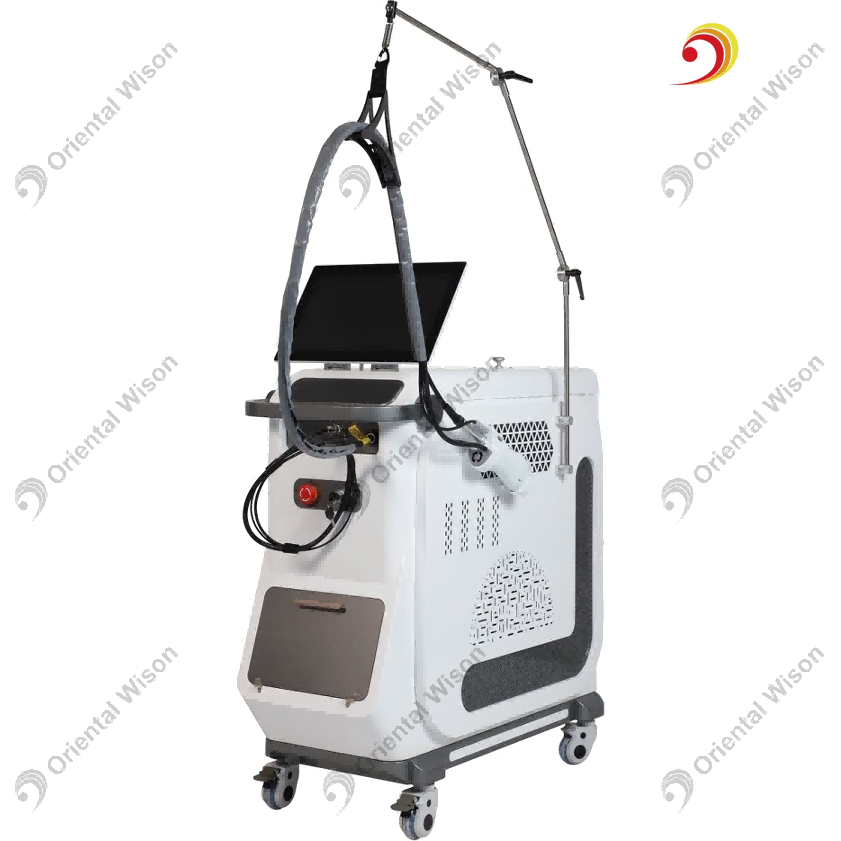 755nm Alexandrite Laser Hair Removal 1064nm Long Pulse Laser Beauty Machine Cosmetic Laser
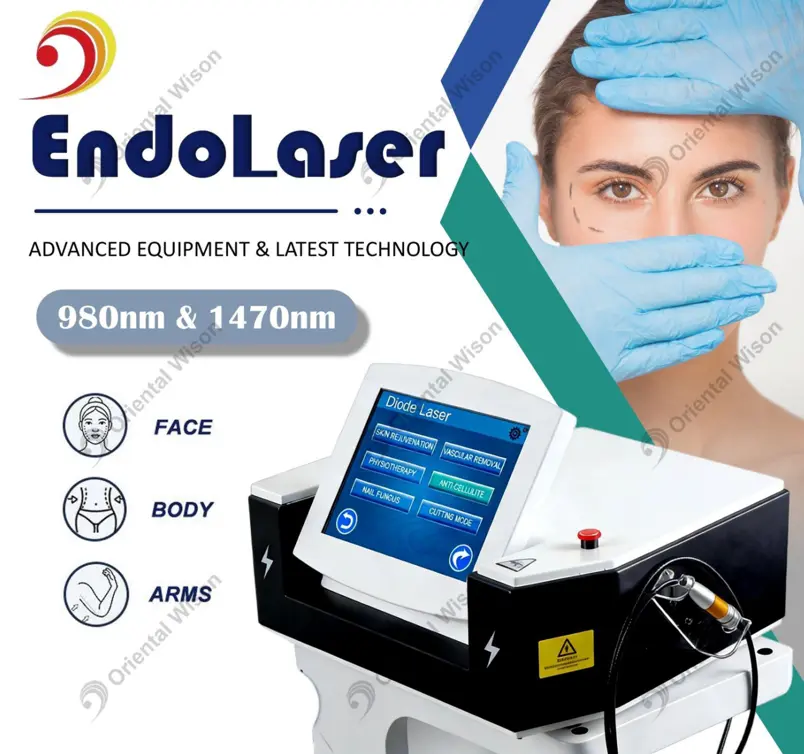 Dual Wavelength 980nm & 1470nm Laser Lipolysis Double Chin Removal Beauty Machine
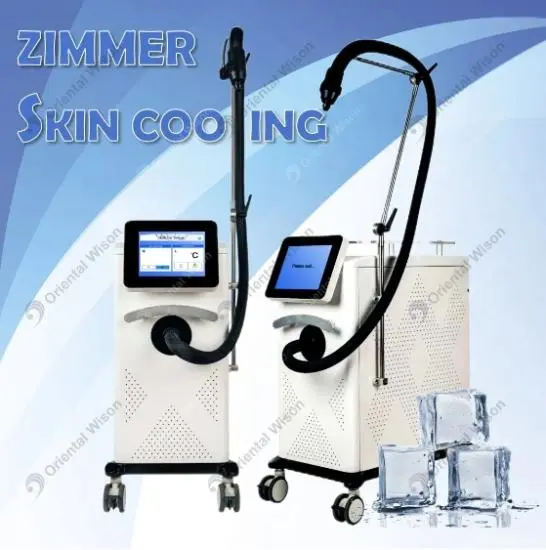 8-inch Screen Zimmer Cooler Machine
 TwinLaser 2940nm 1064nm Anti-Aging Skin Beauty Machine
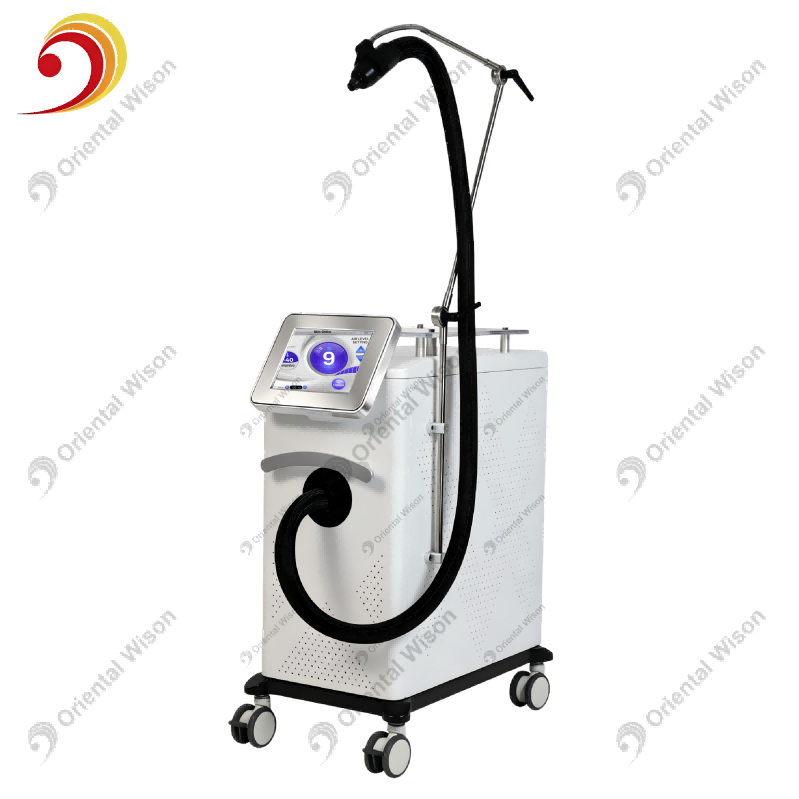 8 inch Screen Time Counting Cold Air Skin Cooling Beauty Machine
- All new products
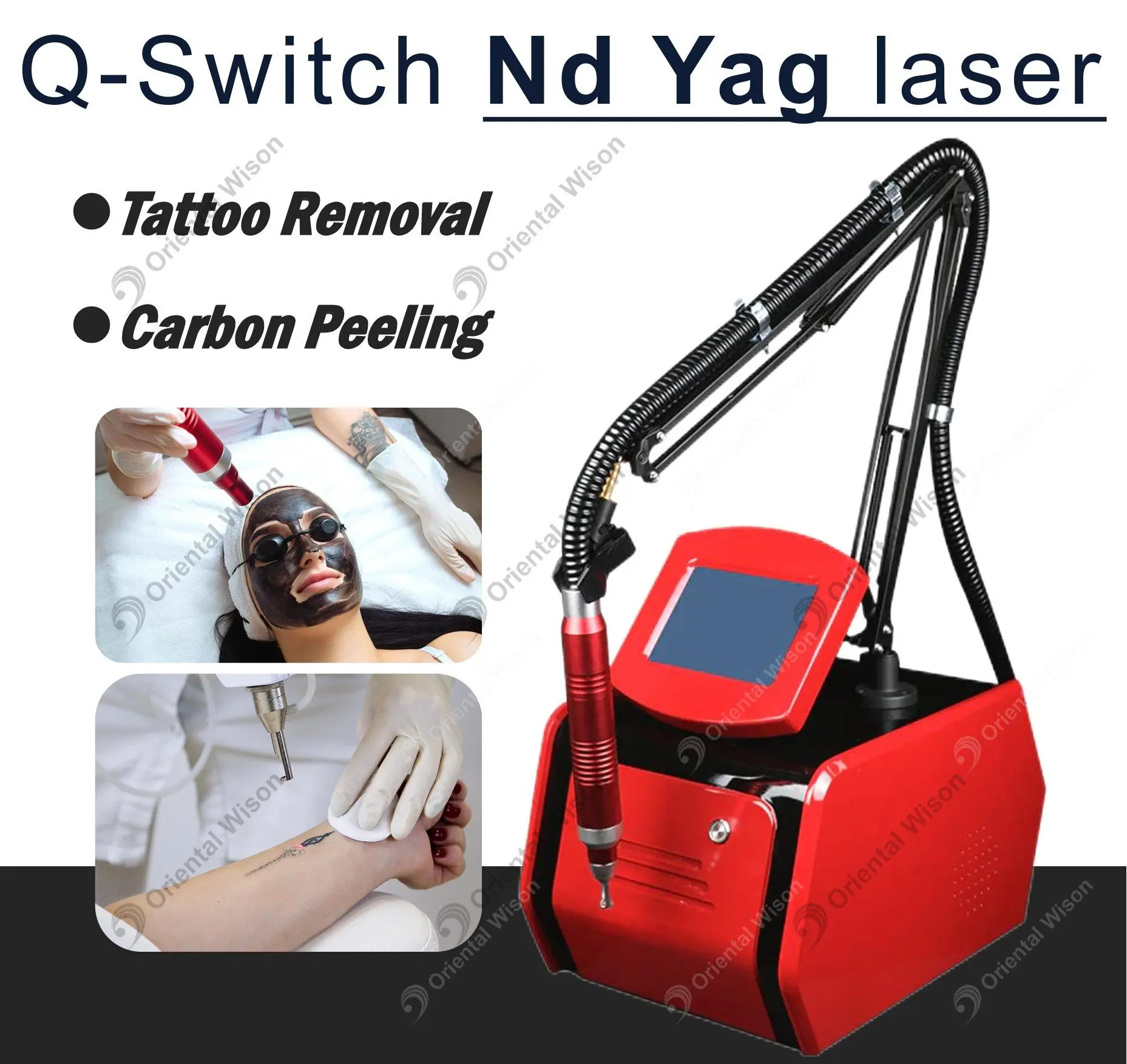
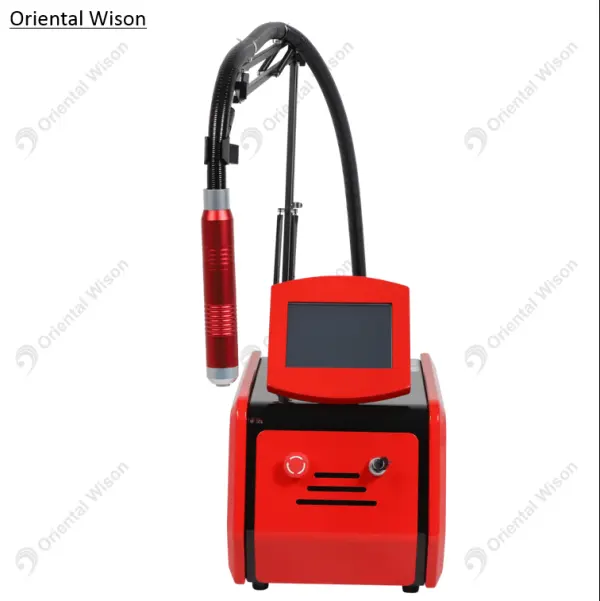
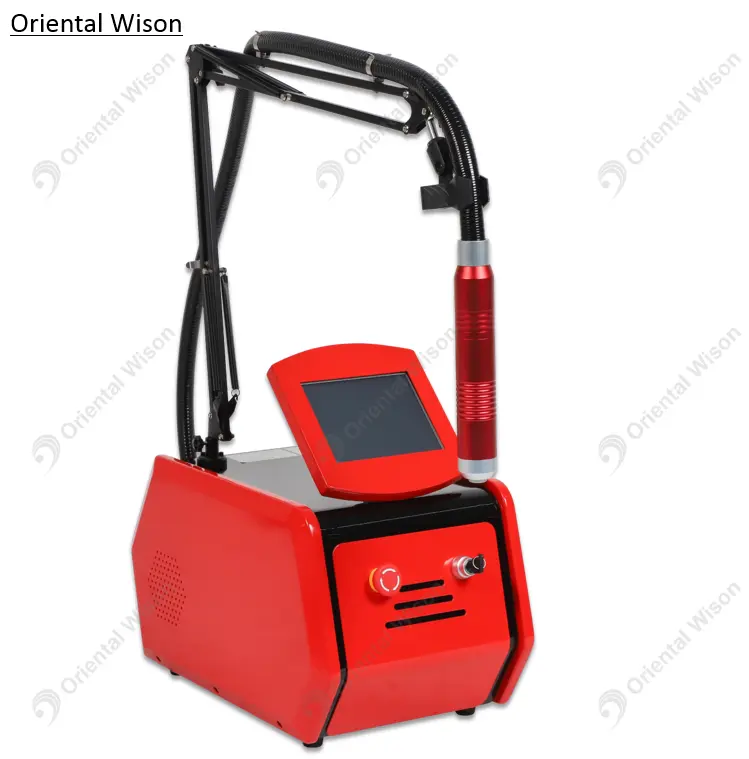
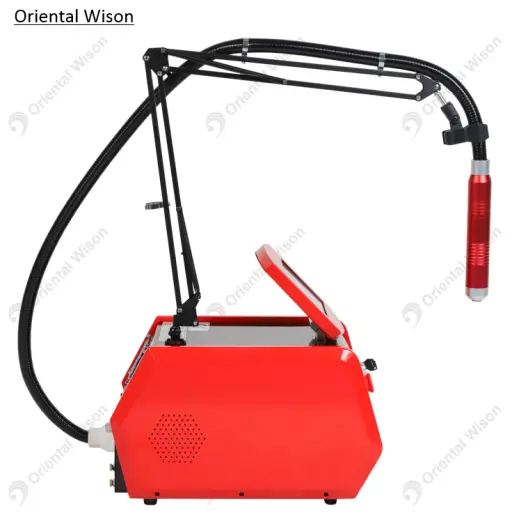
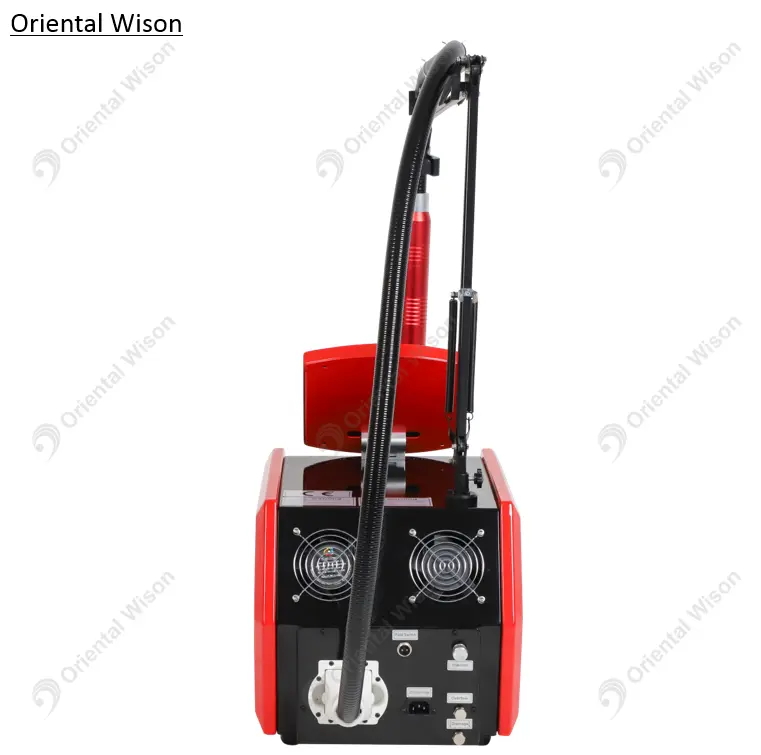
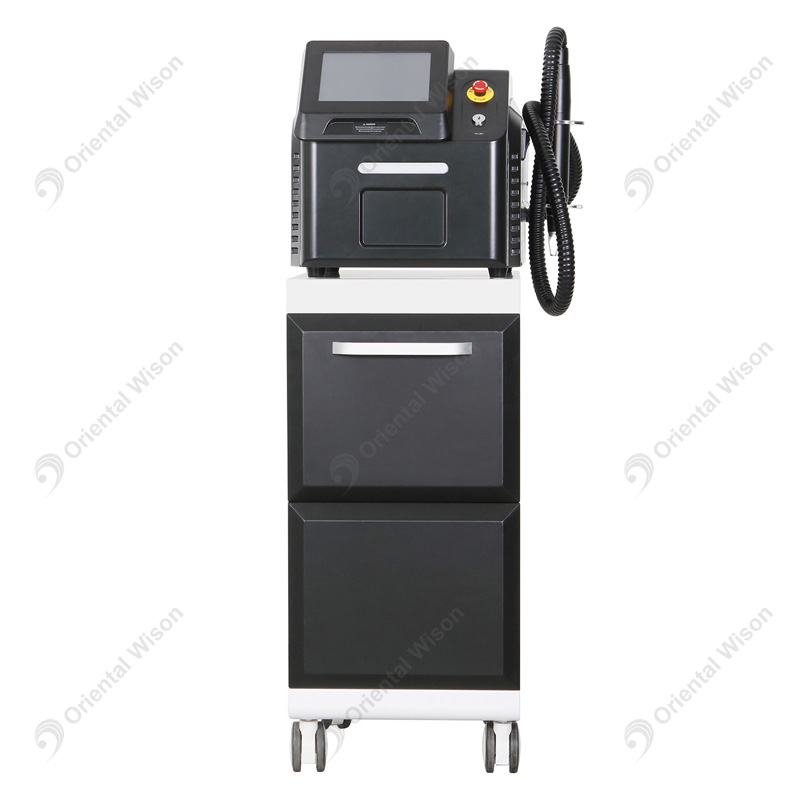
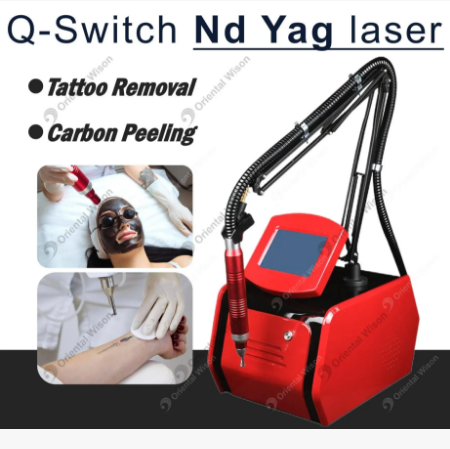
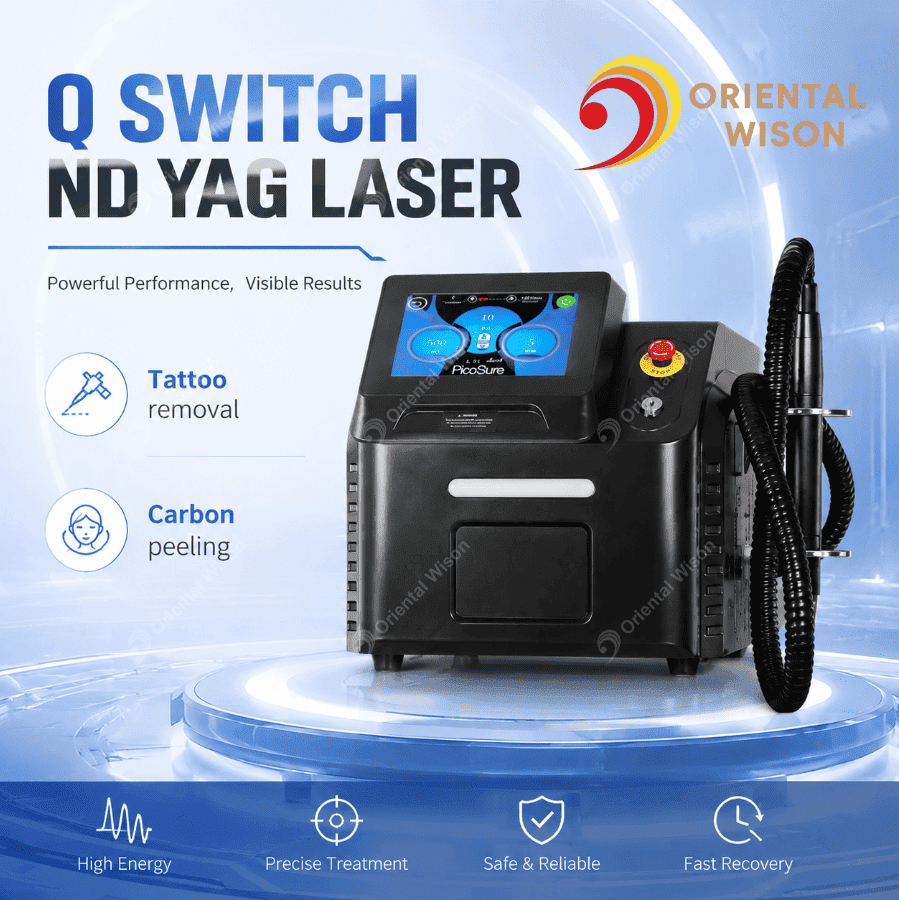
Q-Switch Nd Yag Desktop Laser Machine
Q-Switched Nd:YAG laser --- a specialized type of laser system designed to generate short, high-energy pulses that specifically target pigment in the skin without damaging surrounding tissue.
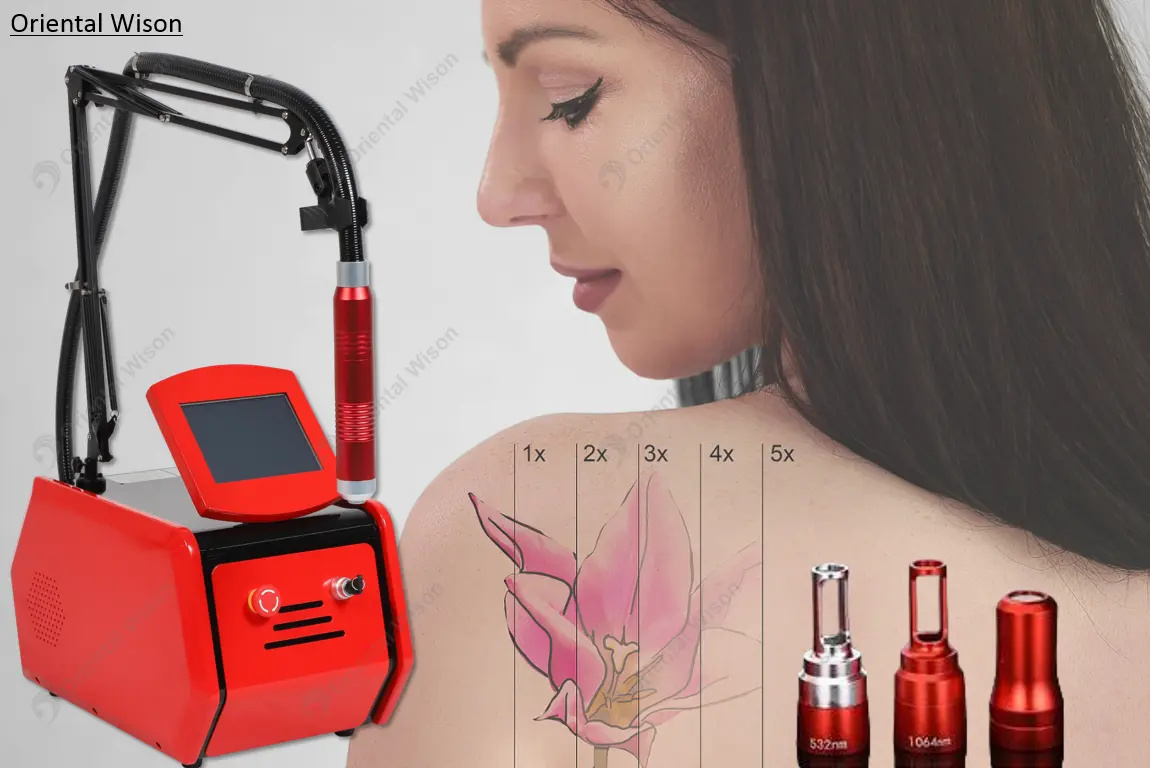
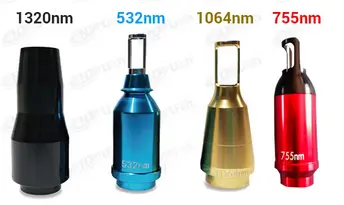
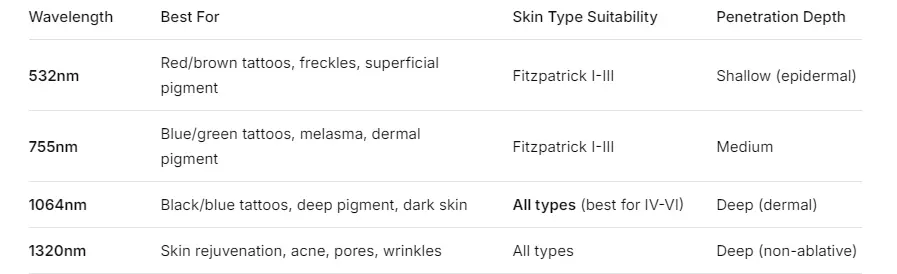
Four replaced handle tips match 4 different wavelength, 1320nm,755nm,532nm,1064mnm, suitable for all types skin treatment.
Four replaced handle tips match 4 different wavelength, 1320nm,755nm,532nm,1064mnm, suitable for all types skin treatment.
Send Inquiry
Product Description
Q-Switch Nd Yag Desktop Laser Machine: Complete Guide to 4-in-1 Wavelength Aesthetic System
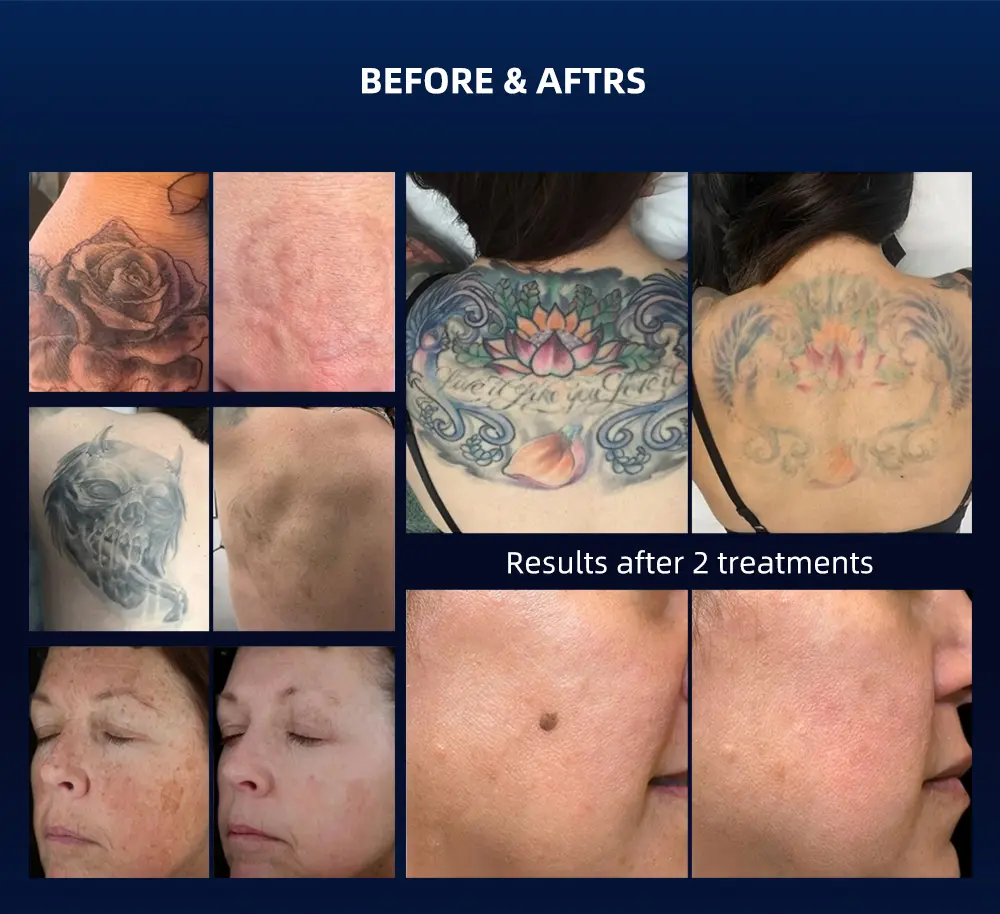
The Q-Switch Nd Yag Desktop Laser Machine delivers high-energy nanosecond pulses to target pigmentation, sun damage, acne scars, uneven skin tone, and tattoo removal while preserving surrounding tissue integrity. The Q-Switch laser function ensures that energy is delivered in explosive photo mechanical pulses rather than continuous heat.
H1: Technical Specifications of Q-Switch Nd Yag Desktop Laser Machine

H3: Wavelength Breakdown and Target Applications

H2: How the Q-Switch Laser Function Targets Pigmentation, Sun Damage, Acne Scars, Uneven Skin Tone, and Tattoo Removal
The Q-Switch Nd Yag Desktop Laser Machine uses a Q-Switch laser function that converts continuous light into ultra-short nanosecond pulses. This function specifically targets pigmentation, sun damage, acne scars, uneven skin tone, and tattoo removal without thermal injury to normal skin.
H3: The Nanosecond Pulse Mechanism for Five Skin Concerns
- For pigmentation: Q-Switch laser shatters melanin clusters into dust-sized particles
- For sun damage: The function fragments solar lentigo cells layer by layer
- For acne scars: Q-Switch laser stimulates dermal remodeling using 1320nm wavelength
- For uneven skin tone: The function homogenizes melanin distribution across treated areas
- For tattoo removal: Q-Switch laser breaks tattoo ink particles into microscopic fragments that the body eliminates naturally
H3: Skin Safety Profile
The Q-Switch laser function spares normal skin cells because:
- No thermal damage to healthy epidermis
- Zero scarring when protocols followed correctly
- Minimal discomfort during procedures
- Safe for treating uneven skin tone and tattoos on all Fitzpatrick types
H2: Core Features and Benefits of Q-Switch Laser Function
H3: Four Wavelengths, One Q-Switch Laser Function
The Q-Switch laser function inside this desktop machine eliminates the need for multiple devices. One Q-Switch laser system handles:
- Pigmentation: Freckles, melasma, age spots
- Sun damage: Diffuse redness, solar keratosis precursors
- Acne scars: Rolling and boxcar scars
- Uneven skin tone: Post-inflammatory hyperpigmentation
- Tattoo removal: Professional, amateur, and traumatic tattoos in multiple colors
H3: How Q-Switch Laser Treats Tattoo Removal
The Q-Switch laser function is the gold standard for tattoo removal. The mechanism includes:
- Nanosecond pulses target tattoo ink particles without damaging skin
- Different wavelengths match different ink colors (532nm for red/orange, 755nm for green/blue, 1064nm for black/dark blue)
- Ink particles break into tiny fragments after each session
- The body lymphatic system clears fragmented ink over several weeks
- Most tattoos require 3 to 10 sessions depending on ink density and color
H3: How Q-Switch Laser Treats Acne Scars Differently
Unlike ablative lasers, the Q-Switch laser function:
- Uses 1320nm wavelength to heat dermal water
- Triggers neocollagenesis without surface wounds
- Fills atrophic scars gradually over 3-6 sessions
- No post-treatment crusting or infection risk
H3: Treating Uneven Skin Tone with Q-Switch Laser
Uneven skin tone often resists topical treatments. The Q-Switch laser function:
- Breaks both epidermal and dermal pigment
- Normalizes melanocyte activity after 2-4 sessions
- Improves skin brightness index by 40-60 percent
- Works on facial, neck, and décolletage areas
H3: Safe and Efficient Treatment Protocol
Thermal Protection:
- Automatic water-level monitoring device
- Water-temperature control system
Skin Protection:
- Collimator ensures accurate beam delivery
- Q-Switch laser function preserves normal skin architecture
H3: Portable and User-Friendly Operation
- LCD touch-screen with preset protocols for pigmentation, sun damage, acne scars, uneven skin tone, and tattoo removal
- Collimator improves treatment accuracy over irregular surfaces
H2: Clinical Applications of Q-Switch Laser Function
H3: Targeting Pigmentation

H3: Treating Tattoo Removal by Ink Color

H3: Treating Sun Damage
- Diffuse actinic damage: 532nm + 755nm combination
- Solar elastosis: 1320nm for collagen repair
- Poikiloderma of Civatte: 1064nm for redness and pigment
H3: Resurfacing Acne Scars with Q-Switch Laser
- Rolling scars: 1320nm, 4-6 sessions
- Boxcar scars: 1064nm + 1320nm alternating
- Ice pick scars: Combined with microneedling (not laser alone)
H3: Correcting Uneven Skin Tone
- Post-inflammatory hyperpigmentation (PIH): 1064nm low-fluence
- Periocular dark circles: 755nm superficial passes
- Generalized uneven tone: Full-face 1064nm toning protocol
H2: Frequently Asked Questions About Q-Switch Nd Yag Desktop Laser Machine
FAQ 1: How does the Q-Switch laser function target pigmentation, sun damage, acne scars, uneven skin tone, and tattoo removal all at once?
Answer: The Q-Switch laser function uses four different wavelengths, each absorbed by a specific chromophore in the skin. For pigmentation and sun damage, 532nm and 755nm shatter melanin clusters. For acne scars, 1320nm heats water in the dermis to stimulate new collagen without breaking the skin surface. For uneven skin tone, 1064nm passes evenly reduce background melanin through a process called laser toning. For tattoo removal, each ink color absorbs a specific wavelength: 1064nm for black ink, 532nm for red ink, and 755nm for green or blue ink. The same Q-Switch laser machine treats all five concerns by simply changing the handpiece tip and adjusting fluence settings. No other desktop system offers this five-in-one capability.
FAQ 2: How many sessions with the Q-Switch laser are needed to see improvement in acne scars and tattoo removal?
Answer: Acne scars require 4 to 8 sessions using the 1320nm wavelength of the Q-Switch laser function. Unlike pigment which visibly fragments after one session, scar remodeling takes time. After session 3, patients notice softer scar edges. After session 6, rolling scars become shallower by approximately 30-50 percent. Boxcar scars show the best response, often lifting by 40 percent after 8 sessions. For tattoo removal, most professional tattoos require 6 to 10 sessions spaced 6 to 8 weeks apart. Amateur tattoos clear faster, typically in 3 to 6 sessions. Black ink responds best to the 1064nm wavelength. Green and blue inks require the 755nm wavelength and more sessions. The Q-Switch laser does not remove scar tissue but builds new collagen underneath, while tattoo ink is cleared by the body lymphatic system over several weeks after each session.
FAQ 3: Can the Q-Switch laser treat uneven skin tone and tattoos on dark skin without causing more pigmentation?
Answer: Yes. The 1064nm wavelength of the Q-Switch laser function is the safest option for Fitzpatrick skin types IV to VI when treating uneven skin tone and black tattoo ink. The long 1064nm wavelength bypasses epidermal melanin and targets deeper pigment or tattoo ink. The Q-Switch laser delivers energy in nanosecond pulses, which generates a photo mechanical effect rather than heat. This means minimal thermal stimulation to melanocytes, significantly reducing the risk of post-inflammatory hyperpigmentation. For tattoo removal on dark skin, the 1064nm wavelength is preferred for black ink. The 755nm and 532nm wavelengths carry higher risk of hypopigmentation on darker skin types and should be used with caution. Recommended settings: low fluence (2-4 J/cm²), 10Hz repetition rate, 6-8 passes over uneven areas. Always perform a test spot on darker skin types before full treatment.
H2: Device Operation Guidelines for Five Skin Concerns
H3: Pre-Treatment Checklist
- Identify which concern to treat (pigmentation, sun damage, acne scars, uneven skin tone, or tattoo removal)
- For tattoo removal, document ink colors and tattoo age
- Select correct wavelength based on diagnosis or tattoo ink color
- Verify water level in cooling system
- Apply protective eyewear
H3: During Treatment by Concern

H3: Post-Treatment Care
- Sun protection mandatory for all five concerns
- For tattoo removal, cover treated area for 24 hours
- Avoid exfoliants for 5 days after treating acne scars
- Hydroquinone may be used between sessions for pigmentation
- Moisturize heavily after 1320nm treatments
H2: Comparison: Q-Switch Laser vs Other Modalities

H2: Maintenance Requirements
H3: Daily Checks
- Wipe handpiece tips after treating pigmentation, sun damage, and tattoo removal
- Check water level before acne scar sessions and tattoo removal sessions (longer treatment times)
H3: Monthly Maintenance
- Calibrate energy output for each wavelength
- Examine all four tips for wear
- Document session counts per treated concern
H2: Conclusion
The Q-Switch Nd Yag Desktop Laser Machine uses a dedicated Q-Switch laser function to effectively target pigmentation, sun damage, acne scars, uneven skin tone, and tattoo removal. Four interchangeable wavelengths operated through the same Q-Switch laser engine provide clinical versatility for tattoo removal, pigment clearance, scar remodeling, and tone correction. The desktop form factor, automatic cooling, and LCD interface make this system suitable for clinics seeking one device to manage multiple aesthetic complaints.
Hot Tags: Q-Switch Nd Yag Desktop Laser Machine, Manufacturers, Factory, Suppliers, China, Price, Price list, CE, Quality, Wholesale
Send Inquiry
Please feel free to fill your inquiry in the form below. We will reply you in 24 hours.



X
We use cookies to offer you a better browsing experience, analyze site traffic and personalize content. By using this site, you agree to our use of cookies.
Privacy Policy

 Whatsapp:8613811714803